

7 min read
As the Prime Minister prepares to appoint Antonia Romeo as Cabinet Secretary, Ben Gartside looks at the fierce battles to block her appointment
In Downing Street, a coronation as new Cabinet Secretary is anticipated for Antonia Romeo. So impressed is the Prime Minister that an expedited process is being sought so the Home Office permanent secretary can be appointed at speed.
Romeo would become the first ever woman to hold the position of Cabinet Secretary, though a whisper campaign against her has already formed.
Last week, Lord McDonald launched an unprecedented attack via Channel 4, inviting Downing Street to go looking for bodies in Romeo’s resume.
In his televised interview, the former Head of Diplomatic Service said: “Due diligence is vitally important, the Prime Minister has recent bitter experience of doing the due diligence too late. It would be an unnecessary tragedy to repeat that mistake… if [Romeo] is the one, in my view, the due diligence has some way still to go.”
That intervention meant that previous allegations of bullying and questions about her use of expenses in 2017 resurfaced – despite the fact they were investigated at the time and Romeo cleared.
The interview also brought into the light an animus that has been an open secret in Whitehall for years. It began, it seems, around the time McDonald was appointed Permanent Under Secretary of the Foreign Office in 2015. In his memoir, Leadership, McDonald describes a “senior colleague” as “stylish, energetic, warm, a bit iconoclastic and a bit marmite”, though he adds “preternaturally sensitive to” feedback.
The ”senior colleague” is widely assumed to be Romeo, who was special envoy to US tech firms at the time and was the subject of an investigation into bullying and expenses during his time at the helm.
While he managed the investigation, the ultimate arbiter was Jeremy Heywood. In his memoir, McDonald described his conclusions as “comprehensive and damning” and said her impending promotion to permanent secretary should have been paused or cancelled altogether. However, Heywood intervened to protect his mentee, Romeo, and the promotion still went ahead.
In another section, McDonald recounted blocking the “senior colleague” from what appears to be the US ambassador’s job in 2019.
“The senior ranks of the civil service are chock-a-block with people who didn’t do anything for very long – they agitate to move on and up quickly. Apparent success must be banked professionally before its shortcomings come to light.”
McDonald was on scathing form, describing how Romeo had cashed in on her success managing reforms around probation, before the changes were revealed to be an unmitigated disaster.
He said: “The most senior civil servants had moved on, promoted on the back of a single ‘success’… none of whom has ever suffered professionally for the flawed advice on which the Lord Chancellor based his decisions… The self-promoters not only relentlessly push their own claim, but they deter others from having a go.”
Friends of Romeo label much of the chatter around her sexist – no other senior civil servant has faced as much judgement outside the realms of performance and delivery, or as much focus on their character.
One top civil servant, an ally of Romeo, described McDonald’s behaviour as outrageous.
“At all levels of the civil service, there is a feeling of sheer outrage that a retired civil servant could launch an attack on an existing one, knowing she can’t defend herself against it. It is a drive-by on her, and deeply damaging to the institution.”
She confounds the old nostrums of the civil service
Dave Penman, general secretary of the FDA union, tells The House: “She’s an ambitious woman who doesn’t mind a bit of publicity. A lot of underlying rumours around her are an example of sexist, misogynistic culture. Lord McDonald’s talk around vetting is nonsense. She’s been vetted within an inch of her life already; she can see documents that cabinet ministers don’t have access to.
“She’s quite a dynamic, people-focused leader. I was quite impressed with that, and I’m of the view that senior leadership in the civil service should have more of a profile. She’s much more in the leadership role than the courtier role, and that’s what the civil service needs right now.”
That being said, concerns around bullying behaviour still require probing. One civil servant who worked under Romeo says she responded poorly to bullying allegations levelled at former cabinet minister Dominic Raab, and had ignored a slew of staff leaving his private office.
Penman disagrees: he sees Romeo as the only permanent secretary to have been shown by the investigation to have confronted Raab on his behaviour.
Others are more robust – albeit from behind the cloak of anonymity. A minister was quoted in The Sun as saying McDonald was part of a “posse of old baldies throwing dirt on a brilliant woman for having a bit of chutzpah”.
Sir Matthew Rycroft, a former colleague, and Rupert McNeil, the former head of government HR, are among those who have defended Romeo on the record.
Allies bill Romeo as a reformer, eager to enact change within Whitehall at the best of the government. In her office, a poster reading “Keep Calm and Carry On Transforming” sat above her desk, unwilling to accept stasis within the government.
Through this reputation, Romeo has built an unlikely list of allies: She was Liz Truss’ first choice for permanent secretary of the Treasury, before ultimately renegeging and preferring a Treasury insider. Now, numerous Labour advisors are admirers, with Shabana Mahmood’s success at the Home Office being ably supported by Romeo.
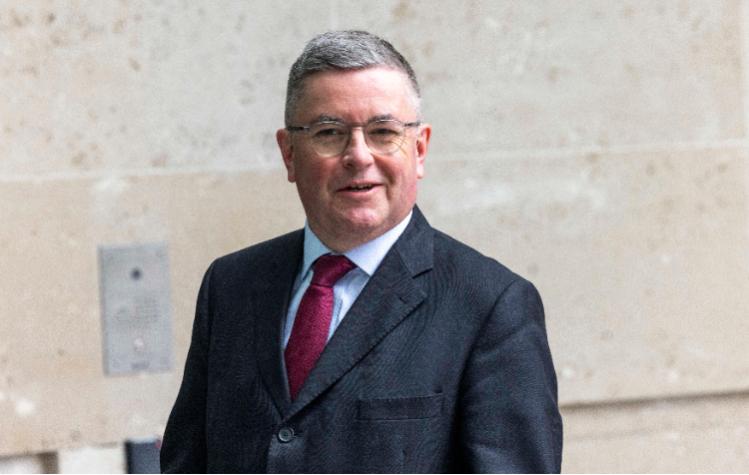
Robert Buckland, who worked with her during her time at the Department for Justice, offers a glowing endorsement.
“I think she is an extremely impressive person. She’s not a conventional backroom figure; she’s not scared of publicly projecting herself, but that shouldn’t be a block on her becoming first female cabinet secretary.
“She confounds some of the old nostrums of the civil service. Seen not heard, be aware of the hierarchy. As a politician, I didn’t have time for that. Running a department during Covid, I needed flat structures and quick decisions.
“She doesn’t play the old civil service game, hiding behind hierarchies and using delay as a tactic.”
Alex Chalk, a former justice minister, describes Romeo in similarly favourable terms to The House magazine: “She is whip-smart, highly intelligent and knows Whitehall inside out. She also has good judgement, meaning she gives candid and practical advice about how best to deliver on ministerial priorities. Crucially, her instinct is to develop solutions, not simply point to problems. She is the reboot the civil service urgently needs.”
Former secretary of state Brandon Lewis echoes this, crediting Romeo for bringing an end to the bar strike and relieving pressure on prison spaces. “[Romeo] is focused, engaging and always has a smile to share, great to work with and a real leader of her team,” he says.
However, one policy wonk points back to her time in probation at justice as an example of the double-edged sword of being popular with officials.
“In 2014, the probation reforms were rushed on the behest of Chris Grayling, as he wanted to be appointed home secretary after the election. The data wasn’t ready, contractors were excluded from bidding in order to meet political goals. If Romeo hadn’t been so popular with politicians, perhaps the reforms would have been more successful.”
A Cabinet Office spokesperson said: “Antonia Romeo is an outstanding leader with 25 years of public service. She has been appointed to three different Permanent Secretary roles and has led hundreds of thousands of public servants to deliver for governments of all stripes.
“As we have repeatedly said, one formal complaint was raised 9 years ago, which was thoroughly investigated. The allegations were dismissed on the basis that there was no case to answer.
“It is entirely inappropriate to resurface dismissed HR proceedings almost a decade later.”
Lord McDonald declined to comment on the book excerpts.