

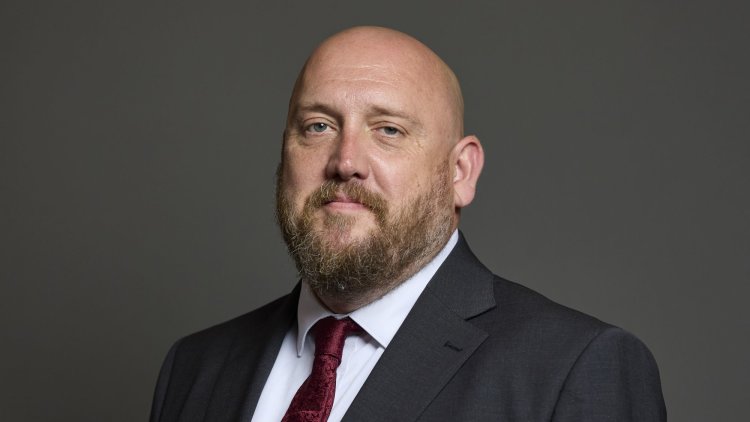
Kevin McKenna MP (Credit: UK Parliament)

7 min read
Former nurse, now Labour MP for Sittingbourne and Sheppey, Kevin McKenna tells Noah Vickers the country needs intensive care to fix its many crises
When Kevin McKenna speaks to his constituents about Labour’s guiding mission in government, he draws on his experience as a nurse.
“We’ve talked a lot about fixing the foundations. I’ve always seen it as more of a resuscitation effort,” says the 51-year-old MP for Sittingbourne and Sheppey.
“‘Staunch the bleeding’ – I’ve often used this with constituents as the metaphor rather than ‘fix the foundations’. It’s staunching the bleeding, stabilising the patient, helping it to recover.”
After any major surgery, he adds, the process of rehabilitation can be its own ordeal. If a patient spends too long in bed, their muscles can atrophy, making it harder to regain their strength.
“When our economy has stagnated to the extent it has, it’s not surprising it’s taking so long to recover.”
McKenna, elected on a majority of 355 votes, acknowledges that the government is not in rude health itself.
“There’s no point pretending, is there? This has been a really difficult time,” he says, speaking in the week that Scottish Labour leader Anas Sarwar called for Keir Starmer’s resignation as Prime Minister.
“Clearly, changes need to happen in the No 10 operation. I think a lot of us now are watching to see if that sticks and does it actually change how we perform at the centre.”
Despite Starmer’s unpopularity with voters, he tells The House that the current PM is still the right man to lead Labour into the next election in 2029.
“Keir, clearly, has got this mission, so he should keep going at it… I’m not naïve to just how challenging that’s going to be – for him and for the country as a whole. He needs to keep working at it. But to make that work, there has to be a gear change in what we’re doing.”
McKenna is used to working in pressured environments, where small decisions can have major repercussions. His career as a nurse was spent in intensive care.
“You see the most extreme things. You see people whose bodies are disintegrating before your eyes.”
One of those people was the poisoned former spy Alexander Litvinenko, who he glimpsed through the window of his room at University College Hospital.
“We didn’t actually know it was polonium… but we did know it was something really scary and Porton Down were involved,” he recalls.
“We’d already got to a point where only people who had already cared for him were allowed in the room. I’ve still got a lot of anger about that, because I had good friends and colleagues who were put at a massive amount of risk by the reckless behaviour of Putin.
“I know the hell they went through. They were absolutely terrified. They were doing their job absolutely professionally.
“In that way that a lot of people in ITU, a lot of people in A&E, a lot of military people are, they shrugged it off visibly. But under it, of course people were very worried, and I’m very angry that we were put through that.”
Having left intensive care for a job at NHS England, he returned to nursing duties during the Covid pandemic. The Nightingale Hospital – at London’s vast ExCel Centre – was in need of matrons. McKenna was only there for five weeks, but says it felt like months.
“I was very worried going into it, that if we couldn’t treat people well and get them out and off the ventilators, it might be a place where we take people in and look after them, and see if we can save them… but actually the mortality rate could be very high.”
London’s Nightingale Hospital had 500 beds, with space for thousands more, but treated only 54 patients during the first wave. Almost half died, which meant its mortality rate ended up being roughly in line with the 47.7 per cent death rate seen at the time among Covid patients in hospital-based intensive care units.
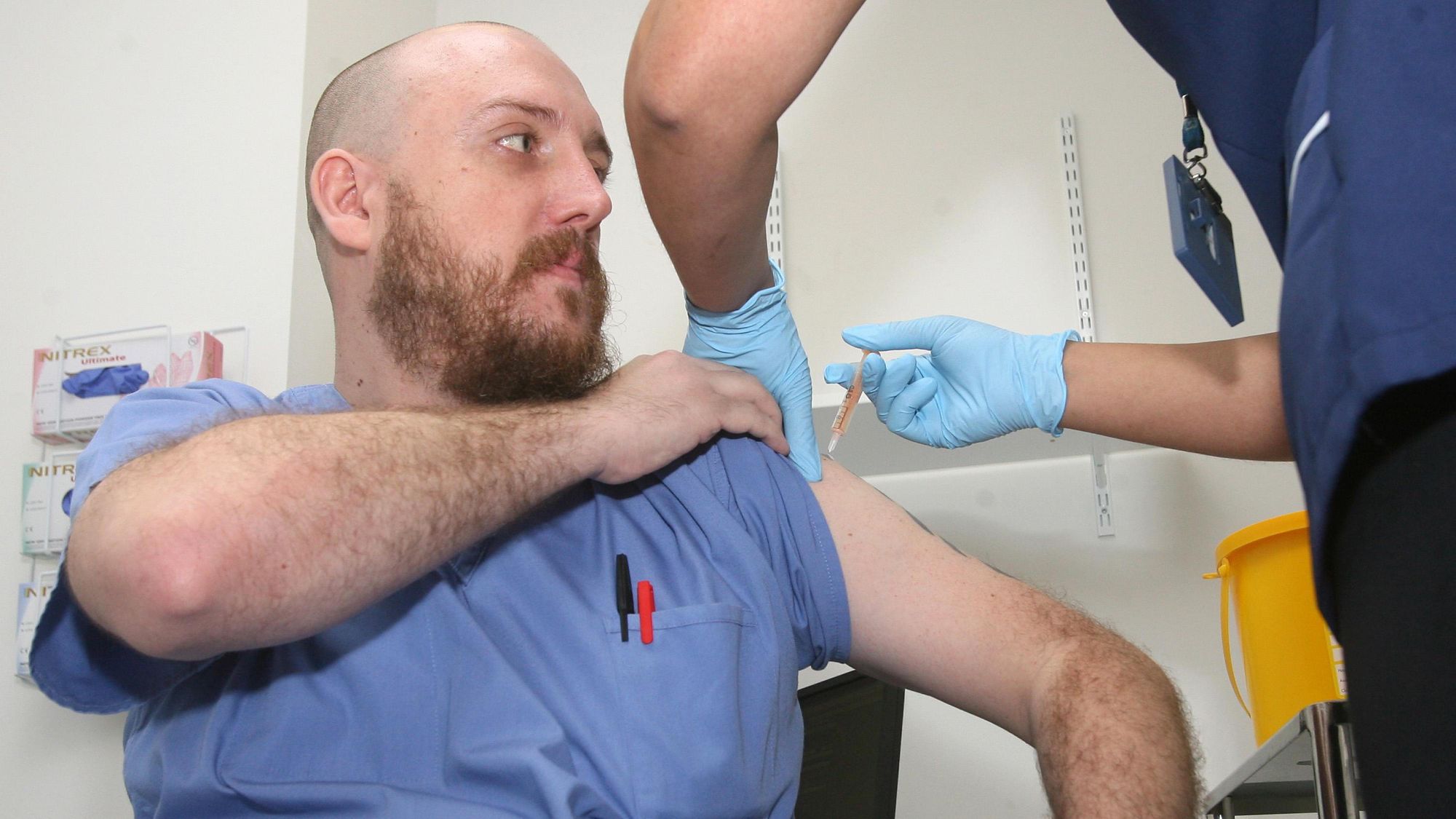
McKenna, who chairs the APPG for Choice at the End of Life, has been frustrated by the assisted dying debate. The role of clinicians, he argues, has been “massively mischaracterised” – particularly when it comes to suggestions that doctors would rush to end patients’ lives without them having properly consented.
Early in his career, McKenna remembers “spending a whole night shift with a patient who just wanted me to switch off the infusion pumps” that were keeping her alive.
“She was quite delirious, actually. She wasn’t really properly competent. She couldn’t give informed consent. Clinicians deal with this all the time…
“The following night she was in a completely different stage – she was just grateful that I hadn’t done what she was begging for. That’s not unusual; we have to deal with that a lot.”
He does believe, however, that the decision to approve an assisted dying request should be taken by a panel who can provide “diversity of thought”, rather than a single judge.
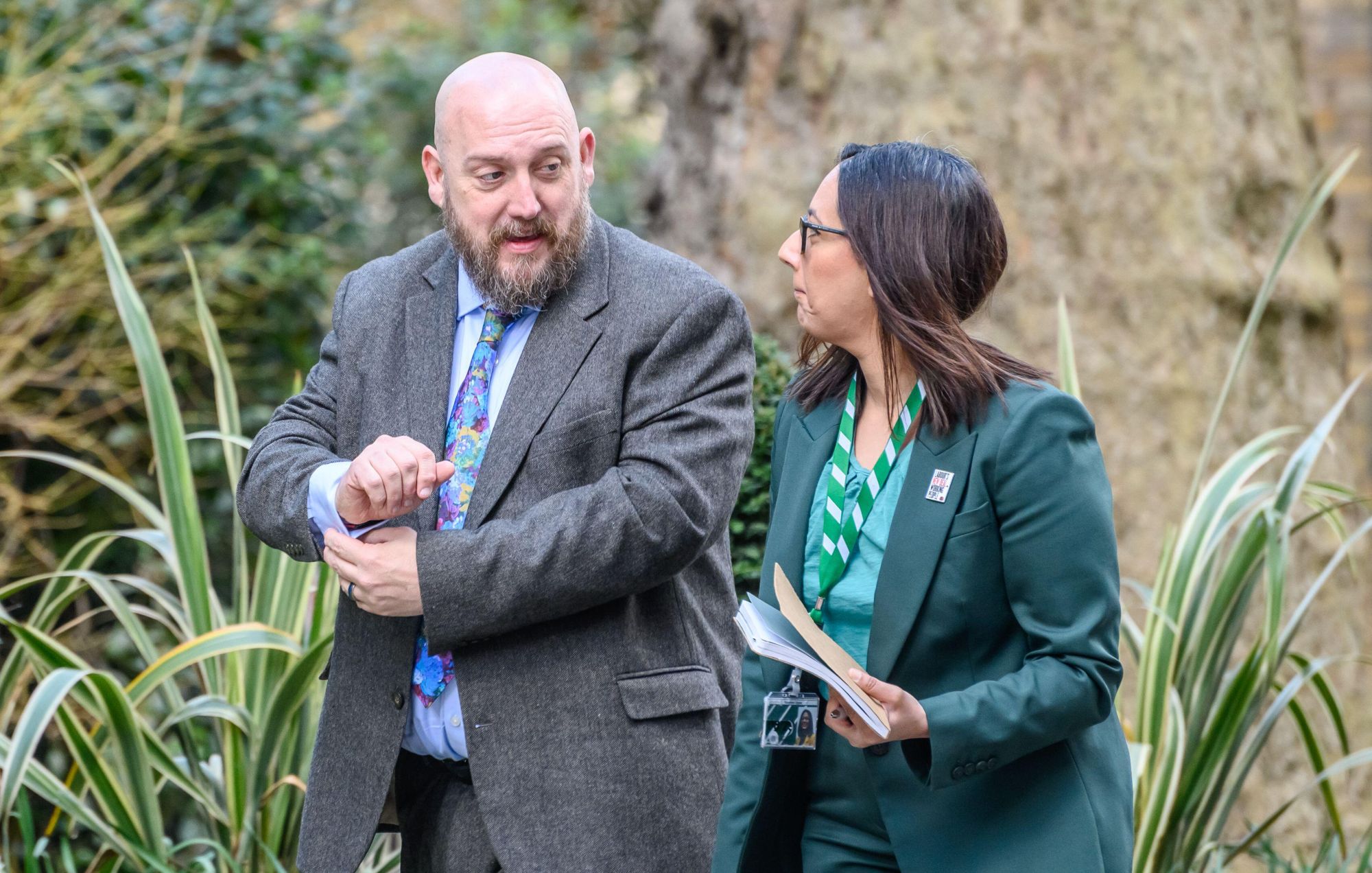
McKenna was first inspired to become a nurse after making numerous visits to see friends and lovers who were sick with HIV and AIDS in the 1990s.
In a debate last year, the MP revealed he is HIV+ himself and emphasised how much better treatment has become. McKenna takes one pill a day, with no noticeable side effects.
“It’s really clear to me that there’s such a big opportunity here to stop new HIV transmissions,” he says.
England’s target is to eliminate new transmissions by 2030, and McKenna believes “stigma and fear” are some of the goal’s biggest obstacles. An interim target – to reduce transmissions by 80 per cent between 2019 and 2025 – appears almost certain to have been missed.
“We weren’t on target for it,” he says. “It’s not entirely surprising, off the back of the pandemic and so on, but also, it needs a focus, and you need to get a grip with things like opt-out testing in A&E.
“The big thing is people who have been diagnosed but then don’t come back for treatment… It’s those areas where we’ve lost track.
“These are tougher bits to crack as well. If people have been diagnosed but then don’t follow on with treatment, then obviously they can be spreading it in the community again. Identifying people is hard.
“At the same time, there are steps the government can take. I think the [2025-2030 HIV] Action Plan is good but, like anything, you can have an action plan – you’ve then got to actually follow it through.”
McKenna may no longer be an MP when the target is met or missed in 2030. If an election were held tomorrow, polls suggest Reform UK would gain his seat. But he is holding fast to his hospital training. “There are some really complex economic and social challenges in the country, let alone the global threats that are coming. I’m very wary of politicians that provide simple solutions.
“It takes it right back to intensive care. To manage people who are really sick, you’ve got to break things down into small chunks, analyse the problem and really come up with a convincing plan that addresses all of those things that are causing harm. That’s how you tackle it.
“It would be nice if complex problems could have a simple solution. But let’s face it: actually, normally, complex problems take quite a complex set of measures to address them.”