

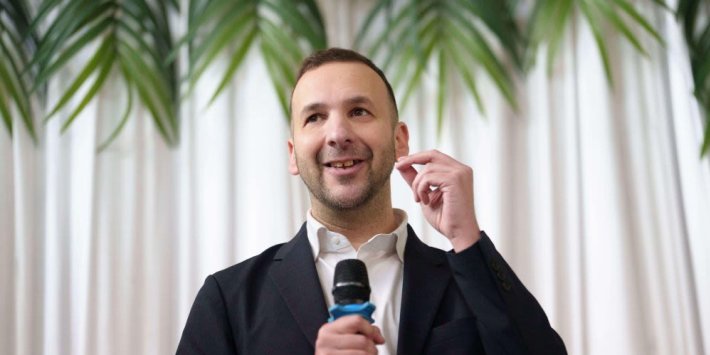
Zack Polanski (Alamy)

5 min read
Zack Polanski’s leadership of the Greens has generated significant interest in the party. Nearly half of UK adults are considering supporting them at the next general election, according to new polling shared exclusively with PoliticsHome. But the research also suggests the Greens face a challenge in turning momentum into hard votes.
The rise of the Greens has been one of the biggest stories in British politics since the 2024 general election. The party has surged in the opinion polls since London Assembly Member Zack Polanski became party leader in September, with his “eco-populism” posing a major threat to the Labour Party’s left flank.
Next week, when voters in Gorton and Denton go to the polls for a highly-anticipated by-election, the Greens are hopeful of unseating Labour in a constituency that the governing party has controlled for over 100 years. Victory in Greater Manchester for Green candidate Hannah Spencer would represent a seismic moment.
New Thinks Insight & Strategy research sheds more light on the party’s recent rise – as well as the hurdles they face in their bid to be the foremost force on the British left.
An online poll of 2,114 adults in the UK, carried out between February 13 and 15, found that nearly half of those surveyed (48 per cent) were considering voting for the Greens at the next general election.
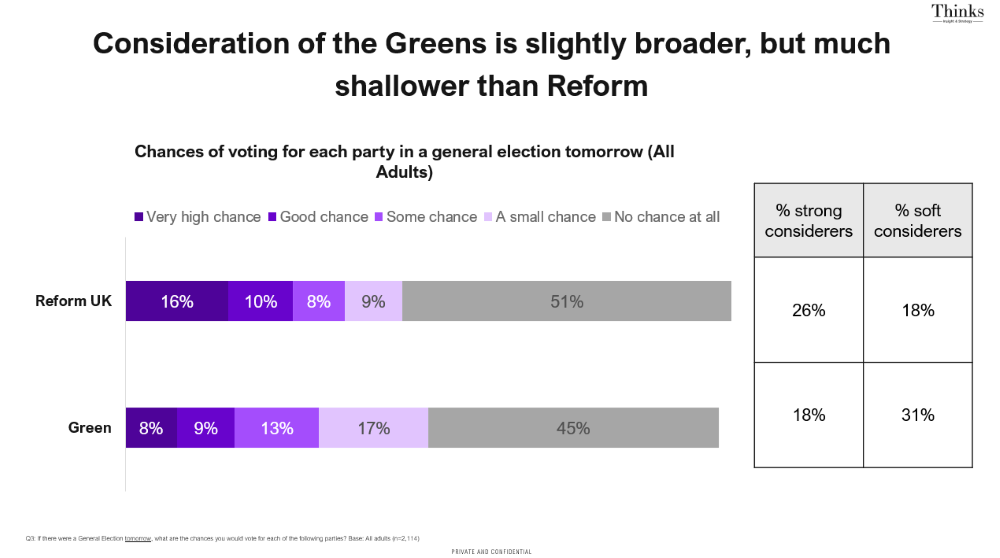
Of those, 18 per cent were strong considerers, meaning there is a ‘very high’ or ‘good’ chance of them doing so, while 31 per cent were soft, meaning there is ‘some’ or ‘a small’ chance.
Asked what is attractive about the Greens, respondents described what they saw as Polanski’s positive attributes.
Nearly two-thirds of the party’s strong considerers (63 per cent) and exactly a quarter of soft considerers said the party leader being “a breath of fresh air” made them more likely to vote for the Greens at the next general election.
In two focus groups carried out by Thinks Insight & Strategy, in East London and Sheffield, people considering voting for the Greens described Polanski as charismatic, articulate and someone who is clear about what he thinks.
On what the party stands for, over three-quarters of strong Green considerers (76 per cent) and 42 per cent of soft considerers said they were more likely to vote for them because they want to help ordinary people, not billionaires. Similarly, 72 per cent of strong considerers and 36 per cent of soft considerers said they were more likely to support the party because they are focused on social and economic justice.
“It’s clear that the Green Party are picking up momentum, and our findings show they should be taken seriously. Almost half of UK adults are considering voting for them, including two-thirds of those who voted Labour at the last election,” Allie Jennings, director at Thinks Insight & Strategy, told PoliticsHome.
Speaking on this week’s episode of PoliticsHome podcast The Rundown, Green Party MP Ellie Chowns said she had met “huge numbers of people on the doorstep” in Gorton and Denton who are “really disillusioned with Labour”.
However, the research shared with PoliticsHome also detected potential challenges for Polanski and co when it comes to turning mid-term popularity into support at the next general election.
The first is the relative shallowness of their current support.
For example, the number of people strongly considering voting Green at the next general election is smaller than the number who say the same about Nigel Farage’s Reform UK. Thinks Insight & Strategy research for PoliticsHome late last year found that 16 per cent of people said there was a ‘very high’ chance of them voting for Reform at the next general election, compared to eight per cent who said the same about the Greens this month.
At the same time, most Green considerers are looking at three or more parties in total, while 73 per cent of strong considerers and 51 per cent of soft considerers told the survey they would vote for whoever was best-placed to defeat the Reform candidate in their area.
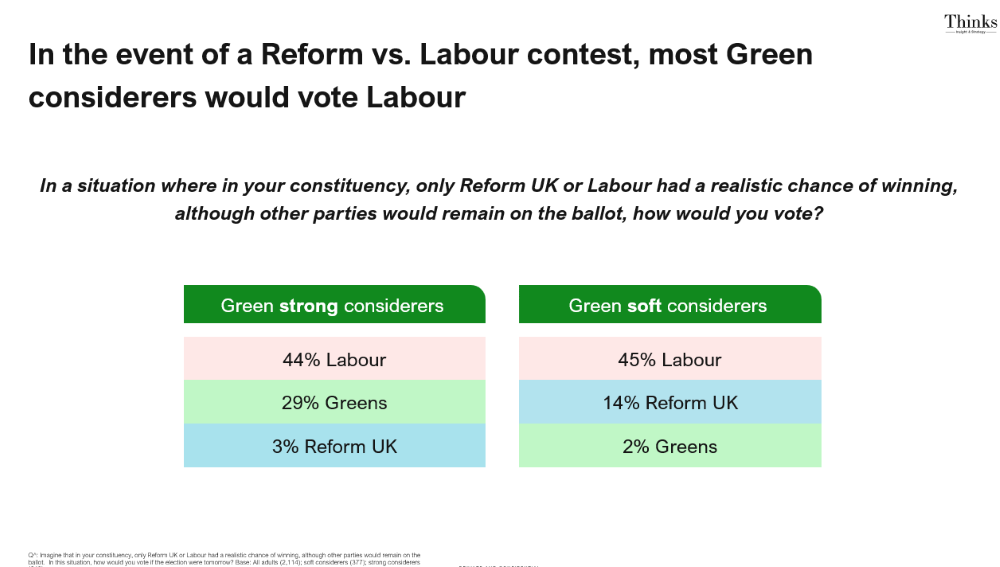
When prompted with a further squeeze question, 44 per cent of strong Green considerers said they would vote Labour to stop Reform, and 29 per cent would vote Green. Meanwhile, 45 per cent of soft Green considerers would back Labour to stop Reform, while just two per cent would vote Green in this scenario. Of the latter cohort, 14 per cent would vote for Farage’s party.
The findings suggest that current interest in the Greens is driven more by disappointment with the status quo than a strong ideological connection to the party.
Jennings added: “What united both the soft considerers and those considering the Greens more deeply was concern about a Reform UK victory. In the event of a credible threat from Reform, those considering Greens were prepared to vote tactically for whoever had the best chance of winning.
“This stands in contrast to consideration of Reform, which is much stronger and stickier. We saw last year that those considering Reform tended to dismiss any concerns about the party as untrue or unimportant. There was also a much stronger belief that they could win both locally and nationally.”
When the survey asked respondents what concerns they have about the Greens, the most prominent was a feeling that the party is too idealistic, with 28 per cent of soft considerers saying this made them less likely to vote for the party.
This played out in two broad policy areas: 21 per cent of soft considerers said they were less likely to vote for the Greens because they are “weak on national security”, while a similar proportion (19 per cent) said the same because the party would “sacrifice economic growth and jobs for environmental concerns”.
In the two focus groups, people looking at the Greens as an option at the next election expressed a belief that the party could not win power, as they are not realistic enough.
“In focus groups, the Greens’ ideas were often dismissed as wishful thinking or fanciful,” said Jennings.