

If you’re planning on a winter break to Cuba, get ready for an adventure rather than a vacation. If you’re wondering if United States President Donald Trump’s oil embargo will shatter Cuba’s Communist government, dig in for a drawn-out slog. And if you’re Cuban, brace for a nightmare.
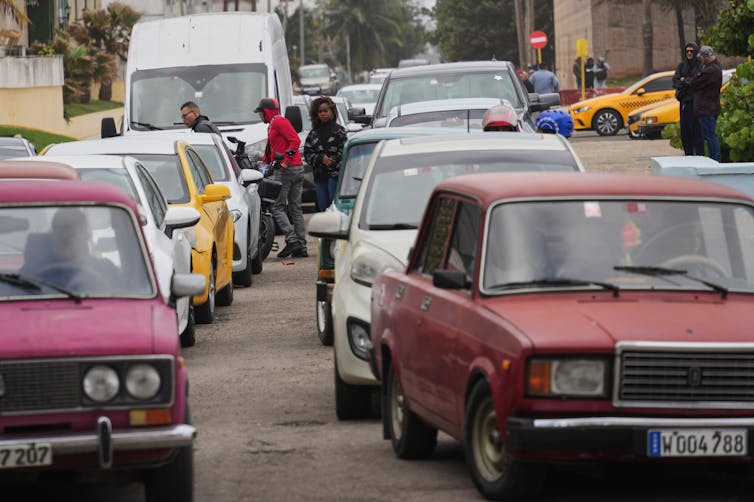
Cuba is on the brink of one of the worst social and economic catastrophes since the 1959 revolution. Energy sources are sparse. The electrical grid is in tatters.
Inflation is over 15 per cent, with the peso tumbling in value. Tropical diseases like dengue, chikunguny and Oropuche virus are surging, largely because the municipal waste system in Havana ground to a halt in 2025.
As many as two million Cubans have left the country since 2021. Infant mortality spiked from five per 1,000 live births in 2021 to 14 per 1,000 in late 2025.
And now, revenue streams from tourism, international medical co-operation and pharmaceutical production are all but dried up. Some 5,000 Cubans volunteered as mercenaries to fight alongside Russia against Ukraine since 2022. Cuba is hurting.
(AP Photo/Ramon Espinosa)
The U.S. versus Cuba
Cuba’s current pain may not be enough to topple its Communist government, despite the desires of many Cuban exiles. Nor is the current crisis all Trump’s work. Cuba is a victim of the breakdown of the old international rules-based order.
Read more:
Venezuela attack, Greenland threats and Gaza assault mark the collapse of international legal order
The U.S. has long targeted Cuba through various economic weapons dating from the early 1960s. One of the most vicious was the Helms-Burton Act that not only prohibited U.S. companies from doing business with Cuba, but also punished companies in other countries for dealing with both Cuba and the U.S.
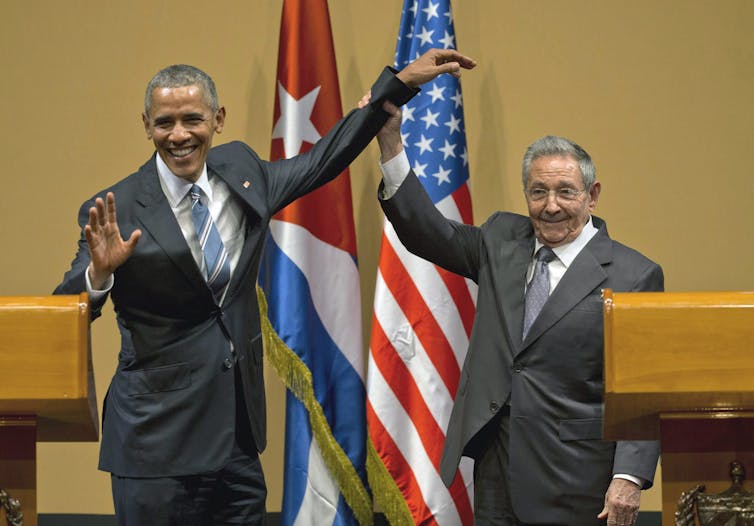
In his second term, U.S. President Barack Obama eased travel restrictions for Americans visiting Cuba along with some trade policies, but this was short-lived. Trump restored these measures in his first administration.
AP Photo/Ramon Espinosa, File)
Cuban doctors
For decades, Cuba relied on an elaborate network of international solidarity and co-operation with rich and poor countries alike. More than 100,000 Cuban doctors served abroad, often providing medical care in rural and remote locations.
While Cuban doctors working abroad received a salary bump, the government received handsome cash deposits and preferred trade agreements for select products. Venezuela received tens of thousands of Cuban doctors and, later, security personnel in exchange for heavy petroleum.
Read more:
Big Pharma vs. Little Cuba: Why Cubans trust vaccines and how they’re helping vaccinate the world
Cuban doctors served in 103 countries, and as of 2021, they were active in 69 nations. Agreements were also made for other personnel to work abroad, including athletic coaches, teachers and engineers.
The U.S. targeted Cuba’s international solidarity work in 2006 by creating the Cuban Medical Professional Parole program, which essentially regarded Cuban workers as “trafficked.”
The State Department approved an annual US$10 million budget until 2017 to locate and recruit Cuban and Cuban-trained doctors working in poor areas of Latin America and Africa. Diplomats offered them expedited immigration to the U.S. But upon arrival, many had their medical credentials ignored and wound up unemployed or underemployed.
Global support
Against one of the longest economic blockades in history, Cuba has nonetheless positioned itself as an active global player. It’s a diplomatic heavyweight with 139 active embassies and consulates worldwide and well over 100 foreign embassies in Havana.
The United Nations General Assembly routinely denounces the American embargo on Cuba. In 2025, amid shifting political alliances, the assembly voted 165-7 in favour of demanding an end to the embargo.
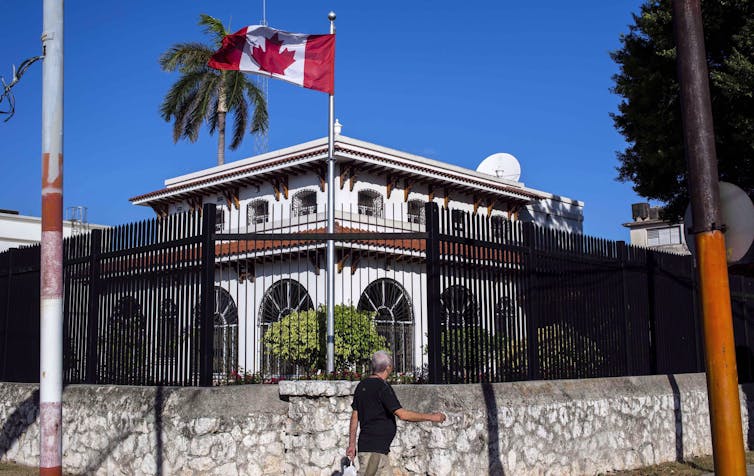
Many international partnerships have kept Cuba going through hard times in the past. Canada, Italy and Mexico, in particular, have kept business with Cuba going despite the U.S. embargo. In the 1990s, tourism expanded, notably from these countries, helping to stimulate the Cuban economy.
THE CANADIAN PRESS
Canadian mining company Sherritt invested heavily in Cuba to extract nickel. When COVID-19 overwhelmed health systems worldwide in 2020, Cuba was the first to volunteer medical services to 19 countries, including affluent states like Italy and Qatar. They even took in a quarantined British cruise ship to offer care.
Read more:
The scene from Cuba: How it’s getting so much right on COVID-19
But in 2026, countries are sending in aircraft to evacuate their vacationing nationals, and companies like Sherritt are grinding to a halt, not because of the U.S. embargo, but because so many professionally trained Cubans have emigrated.
Unlike the 1960s and the 1990s, no brave partners are coming forward to do business with Cuba, which only shows how weak international solidarity is today.
Here are three possible outcomes for Cuba in the coming months in descending order of likelihood:
1. Deals behind the scenes
A backroom deal could be struck between Trump’s White House and Miguel Díaz-Canal’s government in Cuba in much the same way that the Obama administration struck deals with Raúl Castro’s government, working through the Vatican and Canadian diplomats. For example, the Trump administration could permit fuel to be purchased in cash from the U.S., or more tourist real estate may be opened to foreign ownership.
If any deal is in the works, the sticking point will be elections. Unlike Venezuela, with a legitimate opposition in the wings, Cuba has none. Political opponents to the revolution have long been jailed or exiled, and Cuba’s electoral system itself isn’t structured for a multi-party race. Toppling the current government would leave an enormous power vacuum.
2. Martial law
If the fuel embargo remains, Cuba could declare martial law and civil defence to prepare for foreign hostility and to better ration resources.
Díaz-Canal recently hinted at this in what he calls a “war of the people,” which may help explain why Canadian and Russian airlines are now hastily sending in rescue flights for tourists.
Martial law would mean ultra-tight rationing, political volatility and the government acquiring goods through murky channels, which, combined, pose a heightened security risk to the U.S. just 140 kilometres off its shores. Since Dwight D. Eisenhower, most American presidents quickly figured out it was better to have a stable and secure, even though ideologically opposed, neighbour than a politically unstable and vulnerable basketcase.
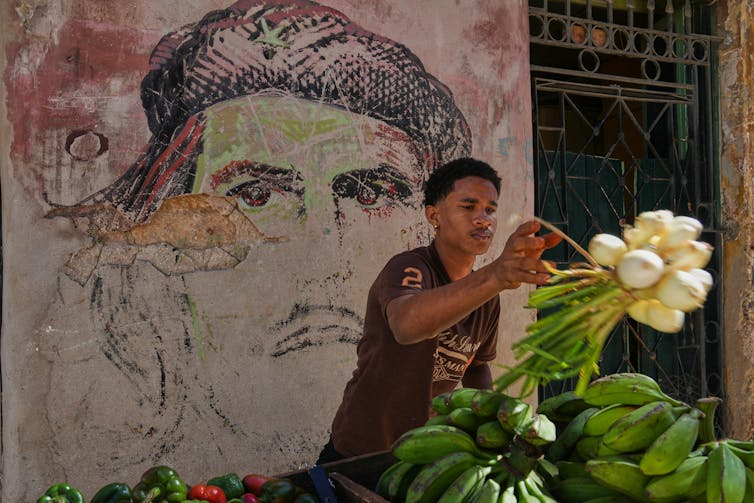
The situation will grow dire since the well-educated professional class has already left, along with many doctors and nurses. In past crises, the educated, youthful professional class was on hand; this time, they’re already gone.
(AP Photo/Ramon Espinosa)
3. The international community steps in
Third, the world could stand by its sentiment at the United Nations General Assembly and sends much-needed resources and trade to Cuba despite the U.S. bellicosity.
It could be a rallying point for the new era of international order, where bullied countries in the Americas and in Europe defy American pressure and bring lifelines to Cuba.
Read more:
Mark Carney’s Davos speech marks a major departure from Canada’s usual approach to the U.S.
International solidarity could reverse some of the harm and take the pressure off Cubans, including those so desperate they’d choose to fight as mercenaries with Russia.
As the world has seen before, when nations stand up to Trump, he usually backs down. Assistance need not come through foreign aid, but simply by keeping the channels open for business.
But if the international community ignores Cuba today, a humanitarian nightmare will unfold soon.