

Women’s Day rallies in Brazil, Argentina and Uruguay focused on femicide, austerity and public funding
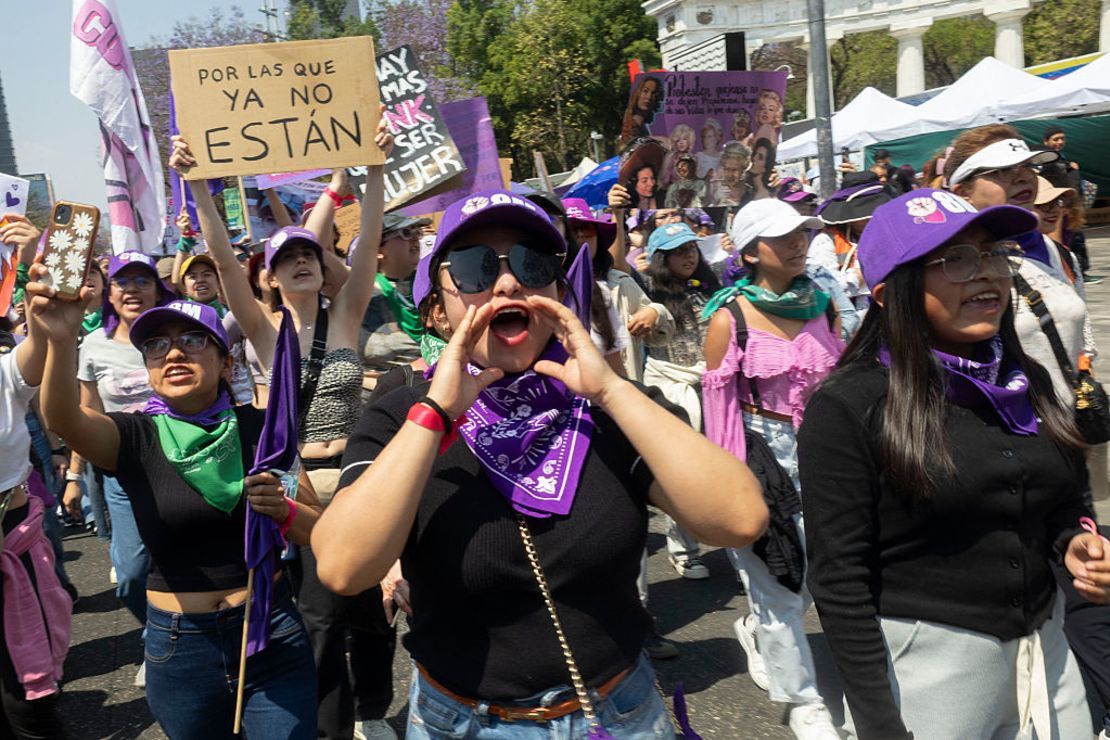
With banners reading “Not all of us made it” and “Not one more daughter, not one more broken mother,” they denounced the daily femicides in Mexico City
International Women’s Day rallies in Brazil, Argentina and Uruguay this weekend produced a shared Southern Cone agenda: opposition to gender-based violence, demands for sustained public policies and warnings about the impact of economic strain and state cutbacks on women’s lives. In Brazil, the message centered on rising femicide; in Argentina, on a strike-backed protest against President Javier Milei’s austerity drive; and in Uruguay, on demands for more funding to enforce gender-violence laws and renewed attention to vicarious violence.
In Brazil, thousands of women marched in Rio de Janeiro, São Paulo and other cities under a slogan repeated on banners and in chants: “Stop killing us.” Associated Press reported that the demonstrations were fueled by outrage over an alleged gang rape case in Copacabana and by the broader backdrop of rising violence against women. Demonstrators also called for an end to what they described as an “epidemic of femicides,” broader abortion rights and changes in working conditions.
In Argentina, the center of gravity shifted to Monday, March 9, after organizers moved the main protest to align it with a work stoppage. The main Buenos Aires march was organized by Ni Una Menos, union federations including the CGT and CTA, and the National Campaign for Legal, Safe and Free Abortion. The rally was framed as a protest against gender violence, labor precarity and the dismantling of gender policies under Milei’s government. Página/12 had reported earlier in the week that the change of date was intended to give the mobilization greater political and union impact.
In Montevideo, thousands of women marched along 18 de Julio Avenue demanding justice for victims of femicide and rape, the safe return of missing people and the dismantling of gender stereotypes. Uruguayan media also reported calls for a “fair budget” for the comprehensive law against gender-based violence, whose full implementation remains constrained by funding shortages, as well as demands linked to vicarious violence, an issue that gained greater public visibility in Uruguay in 2025. La diaria said the march brought together a wide range of groups, but with one common grievance: the Uruguayan state’s unresolved debts to women.
In Chile, the Women’s Day march in Santiago was shaped by the imminent presidential handover. Some 40,000 people, according to Carabineros estimates, gathered from Plaza Italia under the slogan “not one step back, a hundred steps forward,” in a rally organized by the 8M Feminist Coordinator and framed by concern over the arrival of Jose Antonio Kast at La Moneda on Wednesday, when he will succeed Gabriel Boric. The demonstration brought together women from different generations, social organizations, sports clubs and political parties, with signs critical of the president-elect and some members of his incoming cabinet.