

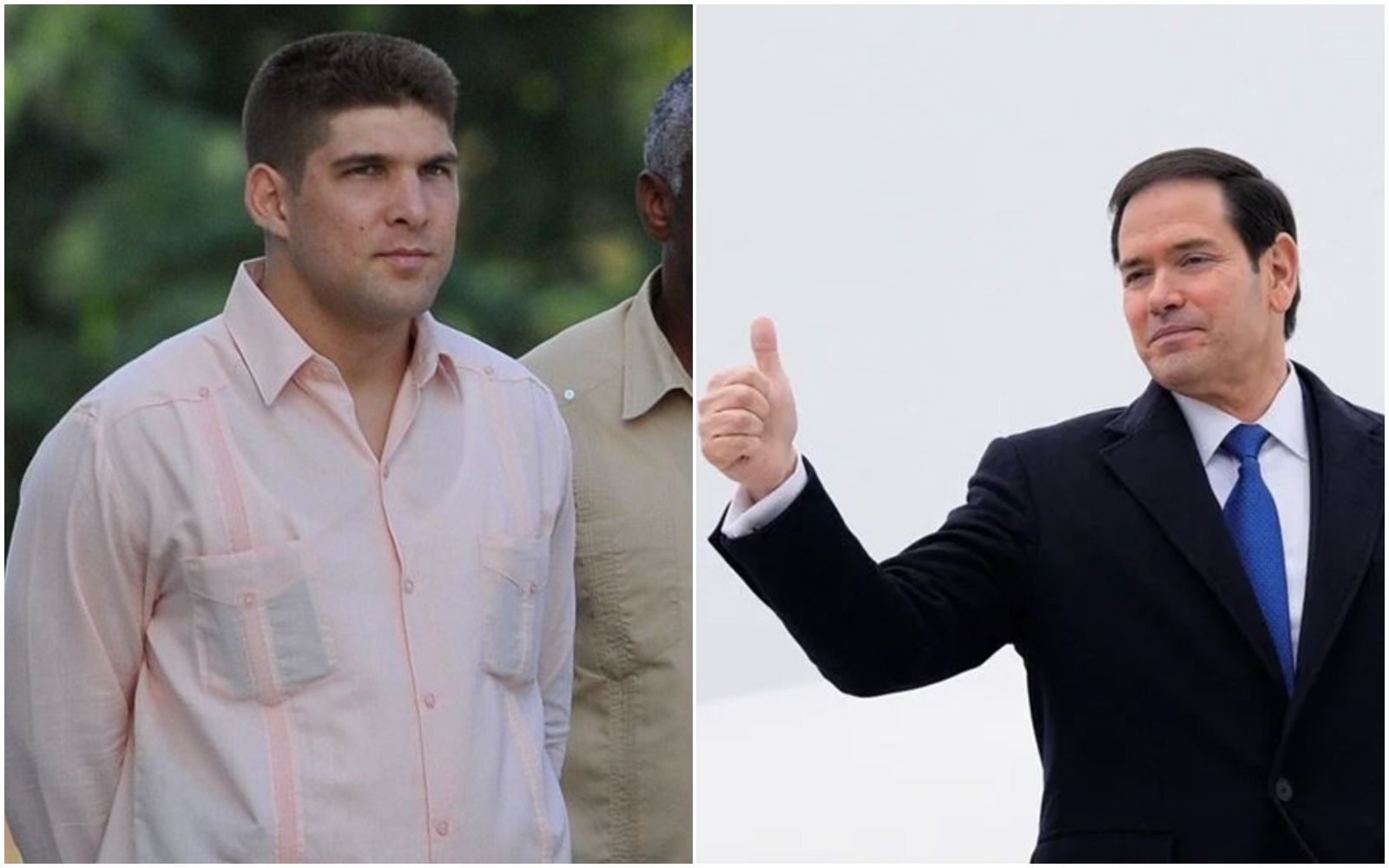
Marco Rubio holds discreet contacts with Raúl Castro’s grandson, Axios reports
It remains unclear whether the back-channel will evolve into a formal process or concrete measures
U.S. Secretary of State Marco Rubio has held discreet talks with Raúl Guillermo Rodríguez Castro, the grandson and caretaker of former Cuban leader Raúl Castro, bypassing official Cuban government channels, Axios reported, citing sources familiar with the outreach.
Axios says the exchanges underscore the Trump administration’s view that the 94-year-old revolutionary remains the island’s main decision-maker despite no longer serving as president. A senior official quoted by the outlet said he would not call them “negotiations,” but rather “discussions” about the future.
In the same account, the official described Washington’s position as that “the regime has to go,” while adding that what that looks like will ultimately be determined by President Donald Trump, who “has yet to decide,” and that Rubio “is still in talks with the grandson.”
The report lands as Cuba faces deepening economic and energy strain, including blackouts and severe fuel shortages, and as external partners move to shore up Havana. On Wednesday, Cuban Foreign Minister Bruno Rodríguez met Russian officials in Moscow, where Russia’s Sergey Lavrov urged Washington to refrain from what he described as plans for a maritime “blockade,” linking the crisis to a U.S. oil embargo and pressure on third countries.
Separately, Trump said on Monday that his administration is “talking to Cuba” and that Rubio “is talking to Cuba right now,” describing the situation as a “humanitarian threat,” according to remarks reported by Bloomberg. Havana has denied in recent weeks that talks are taking place on those terms.
Axios portrays Rodríguez Castro, 41, as a consequential figure in Raúl Castro’s security and family circle, and says Rubio’s team views him as a potential bridge to younger, more business-minded power brokers who may see value in a U.S. rapprochement.
It remains unclear whether the back-channel will evolve into a formal process or concrete measures. Axios frames the outreach as part of a broader strategy that combines intensified pressure on Havana with efforts to identify alternative interlocutors and test transition or deal-making scenarios outside the Cuban government’s official hierarchy.