

Bad Bunny at the Super Bowl: a tribute to Puerto Rico and a defense of America beyond the US
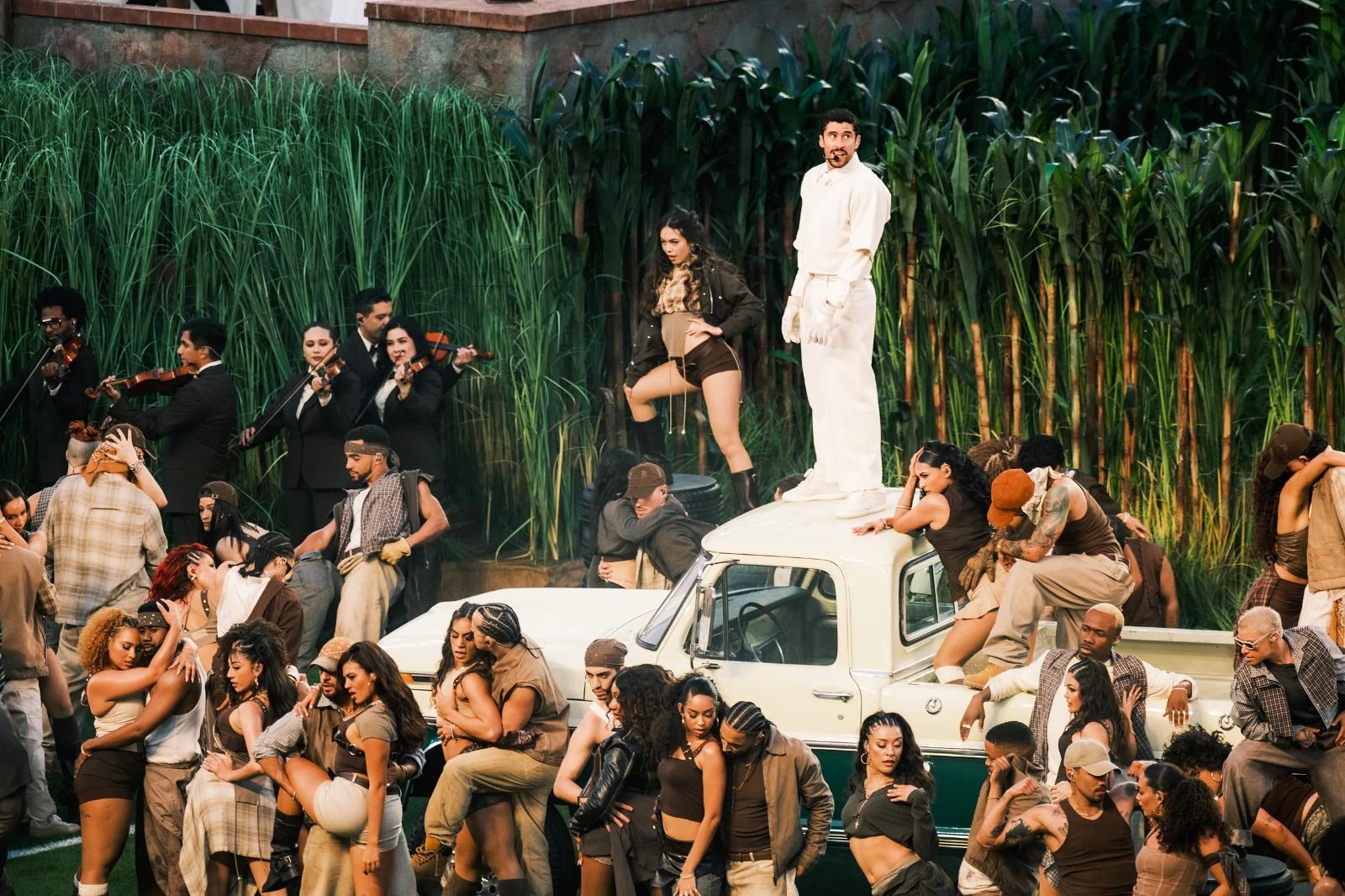
The set leaned into Puerto Rican imagery—palm trees, sugarcane, and Old San Juan rooftops—while a dance troupe waved flags from across the Americas
Bad Bunny turned the Super Bowl LX halftime show into a hemispheric cultural statement: Puerto Rico at the center, Spanish as the primary language, and an idea of “America” that stretches beyond the United States.
The set leaned into Puerto Rican imagery—palm trees, sugarcane, and Old San Juan rooftops—while a dance troupe waved flags from across the Americas. The performance fused chart-era reggaetón with broader Caribbean cues, framing Spanish not as an accessory but as the show’s default register on one of the NFL’s biggest global stages.
Bad Bunny naming dozens of countries in the Americas and then holding up a football that reads “together we are America”….such an iconic Super Bowl performance wow pic.twitter.com/zU3R8WBkNL
— Spencer Althouse (@SpencerAlthouse) February 9, 2026
Lady Gaga and Ricky Martin joined as high-profile guests, cast as both spectacle and lineage—linking earlier waves of Puerto Rican crossover success to Bad Bunny’s current dominance. The Hollywood Reporter emphasized the show’s overt celebration of Puerto Rican culture and noted President Donald Trump’s rapid online reaction, calling it “absolutely terrible” and “disgusting.”
The performance also arrived after months of debate over his selection as headliner. Billboard previously reported that Bad Bunny addressed backlash in a televised monologue, using humor to deflate criticism around language and identity.
For a league that typically keeps politics at arm’s length, the halftime show’s symbols—flags, language, and Puerto Rican iconography—read as a form of messaging without slogans: a reminder that U.S. popular culture is increasingly shaped by audiences and artists whose “America” is multilingual and continental.